Short Answer: What Can We Actually Conclude?
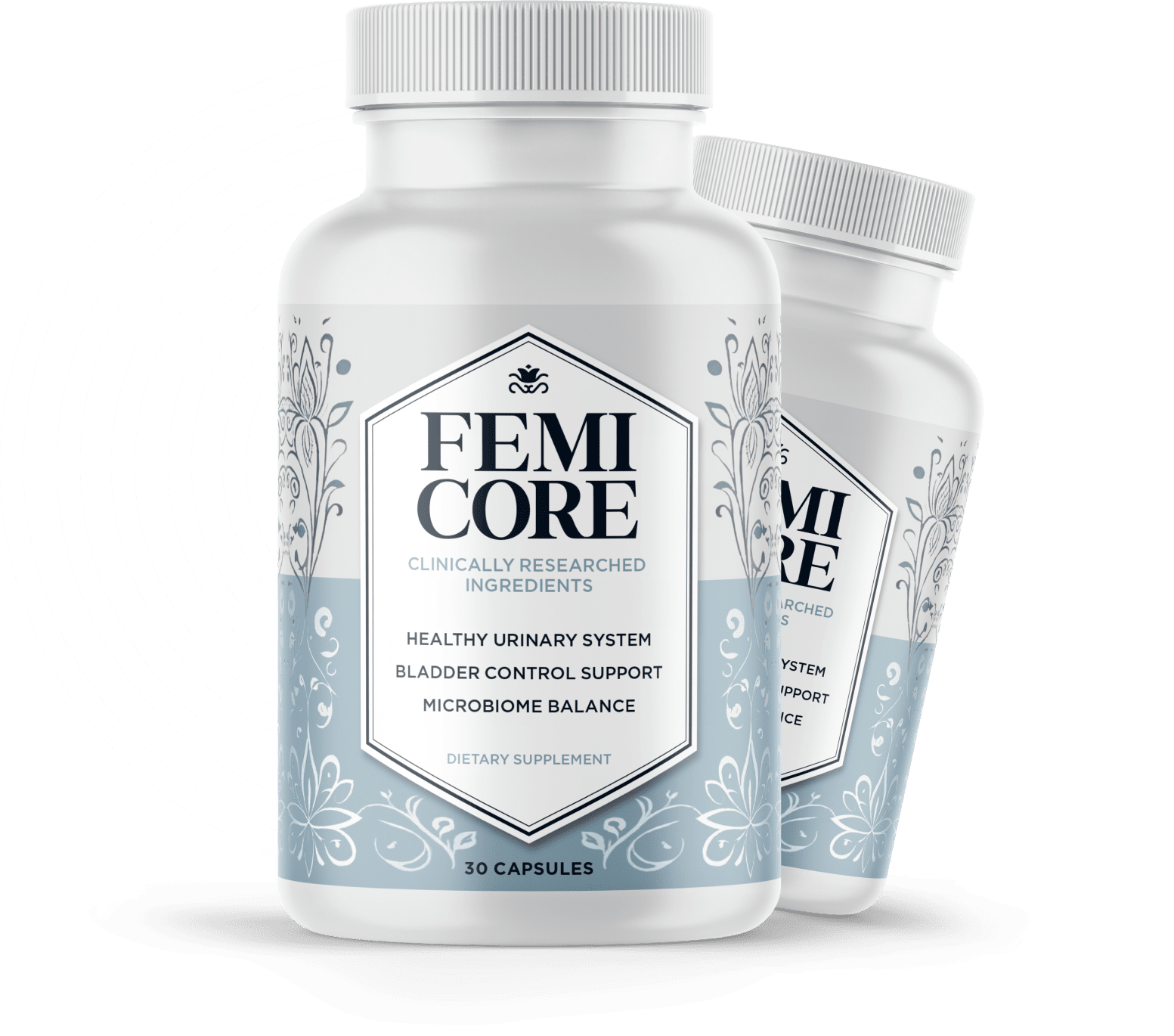
FemiCore has a biologically plausible concept: it combines cranberry and several Lactobacillus species with other botanicals in a formula marketed around urinary and feminine microbiome wellness. Plausibility, however, is not the same as demonstrating that the finished product reliably improves bladder control or other urinary symptoms.
The most defensible interpretation is that parts of the formula connect to legitimate research areas, while the strength of evidence varies substantially by ingredient, strain, dose and outcome. Without appropriately designed clinical trials of the same finished formulation, strong product-level effectiveness claims remain uncertain.
Three Evidence Levels That Should Not Be Confused
Many supplement reviews blur together very different types of evidence. For FemiCore, keeping these levels separate is essential.
Biological plausibility
Research recognizes urinary and vaginal microbial communities and investigates their relationship with women’s urinary health. This supports studying microbiome-oriented approaches; it does not establish a treatment effect for FemiCore.
Ingredient-level evidence
Cranberry and certain Lactobacillus species have been studied in urinary or feminine-health contexts. Findings depend on the exact preparation, strain, dose, population and endpoint.
Finished-product evidence
The strongest evidence would come from controlled human trials testing the commercial FemiCore formulation itself at the marketed dose against an appropriate comparison. Ingredient research cannot substitute for that evidence level.
Does Urinary Microbiome Research Support the Concept?
The idea behind FemiCore is not based on an imaginary biological system. Modern research has challenged the older assumption that the urinary tract is simply sterile, and scientists are studying microbial communities in relation to urinary health.
That research makes a microbiome-support concept scientifically interesting. The important limitation is causality: an association between microbial patterns and a symptom does not prove that changing those patterns with an oral commercial supplement will correct the symptom.
Route of administration, survival through the gastrointestinal tract, colonization, strain specificity and individual baseline microbiota can all affect how probiotic findings translate into real-world outcomes.
Explore the proposed FemiCore urinary-microbiome mechanism →
FemiCore Claims vs What the Evidence Can Support
| Area | Reasonable interpretation | Important limitation |
|---|---|---|
| Urinary wellness support | Some formula components have relevance to urinary-health research. | General relevance does not establish symptom improvement from this exact product. |
| Microbiome balance | Lactobacillus species are important in feminine microbiome research. | Species names alone do not tell us whether the marketed strains, dose and delivery produce a measurable change. |
| Bladder-control positioning | The product is marketed toward women concerned about bladder wellness. | Urinary leakage has multiple possible causes; ingredient evidence does not establish correction of those causes. |
| Botanical support | Cranberry has a recognizable urinary-health research footprint; other botanicals have broader traditional or biological rationales. | Evidence strength is uneven and should not be pooled into one blanket effectiveness claim. |
Want to Check the Current FemiCore Offer?
If you have reviewed the evidence and want to compare the current package options, use the seller-authorized offer page to verify today’s pricing, shipping and refund terms.
Check Current FemiCore OfferWhich Ingredients Matter Most to the Effectiveness Question?
Cranberry and selected Lactobacillus species are particularly relevant when examining the product’s urinary and microbiome positioning. But even stronger ingredient-level research can be difficult to apply when a commercial formula does not provide all the study-matching details needed for comparison.
For probiotics, the exact strain and viable dose matter. For botanical extracts, preparation and amount matter. A label that names a species or plant does not necessarily establish equivalence with the intervention used in a positive study.
Rather than repeating the full ingredient analysis here, see our dedicated FemiCore Ingredients & Evidence guide →.
What Evidence Would Make the Case Stronger?
A stronger product-level case would include randomized controlled human trials on the finished FemiCore formulation, clearly reported participant characteristics, predefined outcomes, transparent doses and probiotic strain identifiers, an appropriate control group, sufficient follow-up and publicly accessible methods and results.
Independent replication would strengthen confidence further. Testimonials, sales-page review counts, mechanistic explanations and studies on separate ingredients can provide context, but they do not perform the same evidentiary role as a controlled trial of the product itself.
Do Customer Testimonials Prove FemiCore Works?
No. Testimonials can describe individual experiences, but they cannot establish causation. Symptoms may naturally fluctuate, expectations can influence perceived change, and customers may simultaneously change diet, fluid intake, exercise, medications or other treatments.
Positive anecdotes therefore should not be treated as clinical proof, while negative anecdotes do not establish that nobody can experience a benefit. For a dedicated review of feedback quality and complaints, see FemiCore Reviews & Complaints →.
What Results Are Realistic to Expect?
There is no evidence-based universal timeline that can guarantee when an individual will notice a FemiCore-related change. Response to supplements can vary with underlying causes, baseline microbiota, adherence, diet, medications and other health factors.
A larger bottle package should not be interpreted as evidence that results will occur after a particular number of weeks. If someone chooses to try the product, tracking symptoms consistently and reassessing whether continued use makes sense is more informative than assuming that improvement is inevitable.
When the “Does It Work?” Question Needs Medical Evaluation First
Bladder symptoms are not one single condition. Infection, pelvic-floor dysfunction, menopause-related changes, medication effects, neurological conditions and other factors can produce overlapping symptoms. A supplement cannot identify which cause is present.
Fever, visible blood in urine, severe pelvic or flank pain, vomiting, difficulty urinating or rapidly worsening symptoms require medical attention rather than waiting to see whether a supplement works.
For ingredient-specific cautions, see our FemiCore Side Effects & Safety guide →.
How to Judge FemiCore Without Overstating the Evidence
A useful evaluation asks separate questions: Is the biological concept plausible? Are individual ingredients relevant to the claimed area? Are the doses and strains transparent enough to match published research? Has the finished formulation itself demonstrated the advertised outcomes? And are the risks, costs and alternatives acceptable for the individual considering it?
On those questions, FemiCore has a research-relevant formula concept, but the evidence should be described more cautiously at the finished-product level than marketing language may imply.
Does FemiCore Work? FAQ
Is FemiCore clinically proven to work?
Research on individual ingredients or related microbiome concepts is not the same as clinical proof of the finished FemiCore formulation. Product-specific controlled trials would provide stronger evidence.
Does cranberry prove FemiCore works?
No. Cranberry has research relevance in urinary-health contexts, but its presence in a multi-ingredient formula does not by itself establish the effectiveness of the complete product.
Do the probiotics in FemiCore support the urinary microbiome?
Lactobacillus species are relevant to feminine microbiome research, but effects are strain-, dose- and context-specific. Product-level outcomes cannot be inferred from species names alone.
How long does FemiCore take to work?
There is no reliable universal evidence-based timeline for the finished product. Individual responses can vary and a marketed supply duration should not be treated as a guaranteed results timeline.
Can FemiCore replace treatment for urinary symptoms?
No. Persistent, severe or infection-like urinary symptoms should be medically evaluated rather than managed solely with a supplement.
Evidence Conclusion: Does FemiCore Really Work?
FemiCore’s formula connects to legitimate areas of urinary and feminine-microbiome research, particularly through cranberry and Lactobacillus species. That gives the concept scientific plausibility. The key uncertainty is whether the exact commercial formulation, at its marketed doses and strains, reliably produces the specific outcomes promoted to consumers.
For that reason, the strongest conclusion supported by the evidence framework is not a guaranteed yes or no: the formula contains research-relevant components, while finished-product effectiveness remains less certain than ingredient-level evidence alone might suggest.
Affiliate disclosure: FitnessLifeMag may earn a commission from qualifying purchases through links on this page at no extra cost to you.