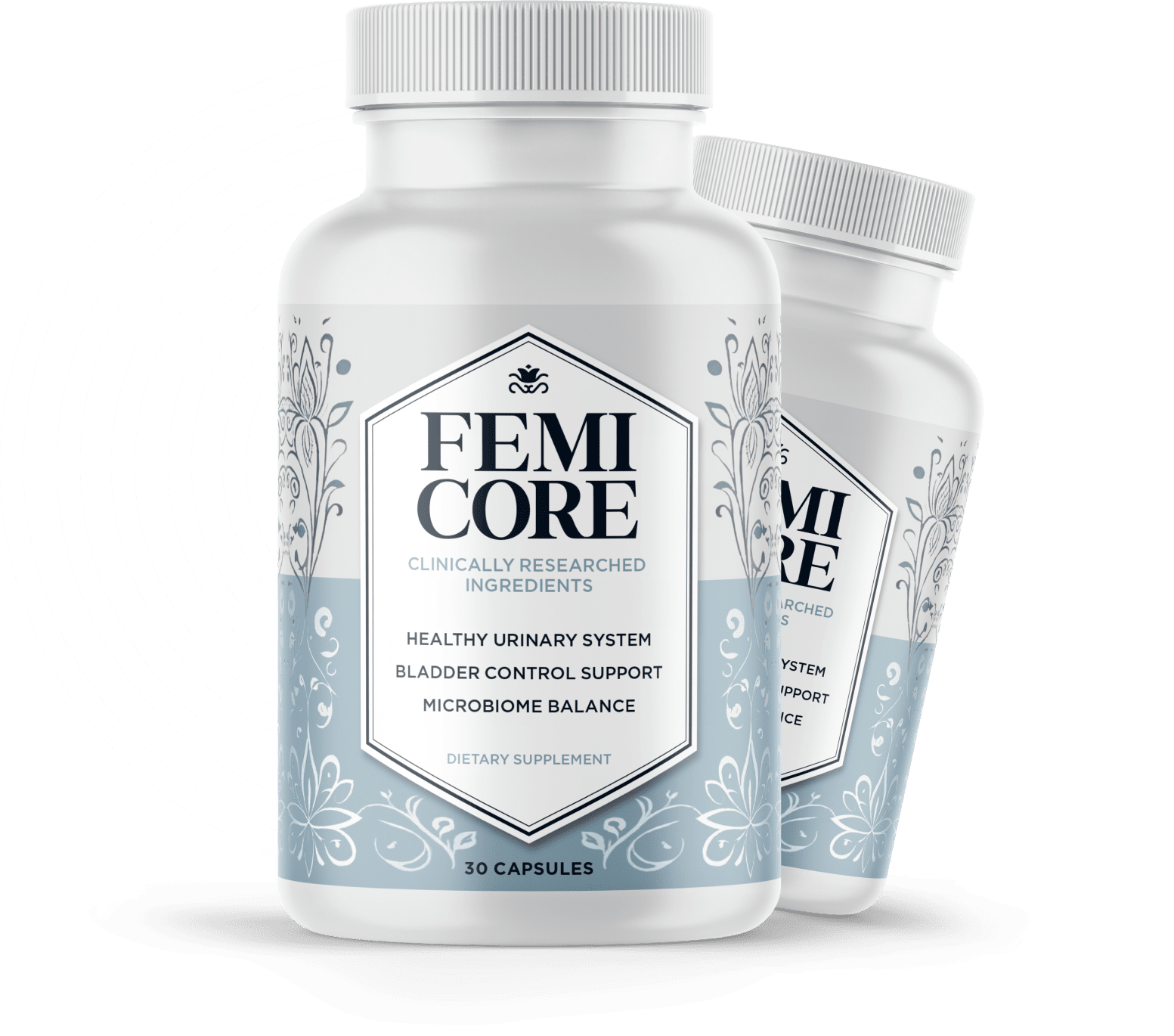
How FemiCore Is Proposed to Work
FemiCore’s marketing concept combines two broad strategies: supporting a favorable microbial environment with Lactobacillus species and providing botanical ingredients that have varying degrees of relevance to urinary or metabolic research.
The proposed logic is more nuanced than “one ingredient fixes the bladder.” Urinary symptoms can have many causes, and a microbiome-support mechanism is only one possible biological pathway. Even when a mechanism is plausible, the finished formula still needs product-specific evidence to establish how reliably it changes symptoms.
What Is the Urinary Microbiome?
Research has changed the older view that the healthy urinary tract is simply sterile. Scientists now study communities of microorganisms associated with the urinary tract and how microbial patterns may relate to urinary health.
In women, urinary and vaginal microbial ecosystems can also be biologically connected. Lactobacillus species are especially relevant to research on feminine microbial environments because they are commonly associated with acidic, Lactobacillus-dominant vaginal communities.
This research provides a rationale for investigating microbiome-support strategies. It does not establish that every probiotic supplement reaches the urinary tract, permanently changes its microbiota or improves bladder symptoms.
The Proposed FemiCore Mechanism, Step by Step
1. Deliver probiotic organisms
The formula lists several Lactobacillus species. The concept assumes that oral probiotic intake may help support microbial balance through gastrointestinal and urogenital pathways.
2. Support a favorable microbial environment
Lactobacilli are studied for their role in feminine microbial ecosystems. Whether a commercial oral product produces a specific change depends on strain, viable dose, survival and individual baseline microbiota.
3. Add botanical support
Cranberry, bearberry, berberine and mimosa pudica add different biological rationales. They should not be treated as interchangeable or as one proven mechanism.
4. Translate biological changes into symptoms
This is the largest evidentiary step. Even if microbial or biochemical changes occur, controlled finished-product evidence is needed to show whether they produce meaningful improvements in urgency, leakage, comfort or other outcomes.
How the Lactobacillus Species Fit the Formula
FemiCore lists Lactobacillus crispatus, L. acidophilus, L. plantarum, L. gasseri and L. casei. These species are not identical, and probiotic effects can be strain-specific. That means evidence involving one precisely identified strain cannot automatically be transferred to every product carrying the same species name.
For a probiotic mechanism to translate into a reliable effect, factors such as strain identity, viable organism count, stability, delivery, host environment and duration can matter. This is why a list of familiar probiotic species supports biological plausibility but does not by itself prove the finished formula’s effectiveness.
See the dedicated FemiCore Ingredients evidence analysis → for the complete formula breakdown.
What Role Might the Botanical Ingredients Play?
| Ingredient | Proposed relevance | Important limitation |
|---|---|---|
| Cranberry extract | Has a recognizable research history in urinary-health contexts. | Preparation, dose and studied outcome matter; cranberry research does not prove the whole formula. |
| Bearberry | Has a history of traditional use in urinary-focused herbal preparations. | Traditional use and biological activity are not equivalent to finished-product clinical proof. |
| Berberine | Biologically active compound studied across metabolic and antimicrobial research areas. | Its presence creates both mechanistic interest and interaction/safety considerations. |
| Mimosa pudica | Used in traditional botanical contexts and included as part of the marketed blend. | Direct human evidence for the specific urinary outcome is comparatively limited. |
How Could Gut, Vaginal & Urinary Microbiomes Be Connected?
Microbial ecosystems do not exist in complete isolation. Researchers investigate how gastrointestinal and vaginal reservoirs, anatomy, hormones, hygiene, medications and other factors may influence urogenital microbial communities.
An oral probiotic strategy therefore has a plausible research question: can administered organisms or their downstream effects support a more favorable urogenital environment? The answer cannot be assumed for every strain or product. Demonstrating that pathway requires more than simply detecting Lactobacillus on a supplement label.
Reviewed How the FemiCore Formula Is Designed to Work?
If you want to inspect the current product presentation, package options and seller terms, use the seller-authorized offer page.
Check Current FemiCore OfferCan This Mechanism Explain Bladder Control?
Not completely. Bladder leakage and urgency can involve pelvic-floor function, bladder muscle activity, menopause-related tissue changes, infection, neurological factors, medications, fluid habits and other causes. A microbiome-centered explanation cannot account for all of these pathways.
That matters because a supplement could have a biologically relevant ingredient profile while still being poorly matched to the actual cause of an individual’s symptoms. Persistent or significant symptoms deserve appropriate clinical assessment.
What Would Prove the FemiCore Mechanism Works in Practice?
The strongest evidence would test the finished commercial formulation in appropriately designed human trials. Researchers would need to define the population, dose, comparator and outcomes, then measure whether changes are clinically meaningful rather than relying only on a theoretical pathway.
Microbiome measurements could strengthen a mechanism study by showing whether the intervention actually changes the microbial community in the predicted direction. Clinical outcomes would still be necessary to determine whether that change matters to the user.
For the broader effectiveness question, read Does FemiCore Really Work? →.
How Long Would a Microbiome-Oriented Approach Take?
There is no universal evidence-based timeline that can be assigned to the finished FemiCore formula. Microbial response can depend on strain, dose, adherence, diet, medications, hormonal environment and the person’s starting microbiota.
Marketing supply length should therefore not be interpreted as a biological countdown to guaranteed results. If someone chooses to use the supplement, symptom tracking and periodic reassessment are more useful than assuming a specific week must produce a change.
Mechanism Also Matters for Safety
Biological activity is not only relevant to benefits. Berberine and other botanicals can create medication or health-history considerations, while probiotics may not be appropriate in every clinical situation.
See FemiCore Side Effects, Safety & Interactions → before treating “natural” or “microbiome support” as synonymous with risk-free.
What the FemiCore Mechanism Cannot Tell Us
A proposed mechanism cannot tell us what percentage of buyers will improve, how large an improvement will be, whether one ingredient is responsible, how long a response will last or whether the supplement is appropriate for a specific medical condition.
Those are outcome questions. They require product-specific data and, for individual medical decisions, appropriate clinical context. Keeping mechanism and outcome evidence separate prevents a plausible scientific story from becoming an unsupported promise.
How Does FemiCore Work? FAQ
How is FemiCore supposed to work?
Its marketed concept combines Lactobacillus probiotics with botanical ingredients in a formula positioned around urinary and feminine microbiome wellness.
Does FemiCore change the urinary microbiome?
The concept is microbiome-oriented, but demonstrating a product-specific microbiome change would require appropriate testing of the finished formulation.
Why does FemiCore contain several Lactobacillus species?
Lactobacilli are relevant to feminine microbiome research, but effects can be strain- and dose-specific. Multiple species do not automatically guarantee a stronger clinical effect.
Does understanding the mechanism prove FemiCore works?
No. Biological plausibility helps explain why a formula might be studied, while clinical effectiveness requires evidence that the finished product actually improves meaningful outcomes.
Can FemiCore’s mechanism address every cause of bladder leakage?
No. Urinary symptoms can have multiple causes outside a microbiome pathway, including pelvic-floor, hormonal, neurological, medication-related and other factors.
How FemiCore Works: Mechanism Takeaway
FemiCore is built around a plausible research concept: combine Lactobacillus species with botanicals relevant to urinary or broader biological pathways and aim to support a healthier microbial environment. The concept is scientifically discussable, but each step from oral ingestion to microbiome change to symptom improvement requires evidence.
That distinction is the central takeaway. The formula’s mechanism can explain why its ingredients are being marketed together; it cannot, on its own, establish how reliably the finished product changes bladder or urinary outcomes.
Affiliate disclosure: FitnessLifeMag may earn a commission from qualifying purchases through links on this page at no extra cost to you.